

How “Performative” Became a Slur for Female Competence
The degradation of the term assumes that a woman’s primary motivation is always to be seen, rather than to be.

The Lady of the Mountains: A Study in Invisible Labour
There lives a lady in a mountain village in Northeast Anatolia, a place where the air tastes of pine and the silence is heavy with the weight of centuries. The landscape there is rugged, unforgiving, yet possessed of a quiet majesty that mirrors the woman who calls it home. She is like a summer breeze when you’re overwhelmed by the heat. She is the smell of homemade soup when you’re ill. She is the laughter that echoes through the walls in crowded family gatherings, a sound that cuts through the chaos like a silver bell. She gives the best hugs known in human existence, the kind that make the world stop spinning for a moment. She is my personal favourite Turkish delight.
She is nearly 90 years old now, and her hands tell a story that history books often omit. She didn’t have the same opportunities as I and the next generation of women in our extended family. She was the eldest daughter to a family of six, born to a mother who had lost her sight. In the hierarchy of a mountain village in the mid-20th century, this meant her life was mapped out before she could even hold a pen. She became the second mother of the family, a shield between her siblings and the harsh realities of a world that didn’t care for the vulnerable.
The moment she graduated from elementary school was the day her childhood ended. While her classmates moved on with their education—including her future husband, provided they were financially stable enough and, crucially, male—she was drafted into her father’s restaurant. There, tucked away in the back, she washed dishes until her skin pruned and her back ached. She didn’t just wash plates but also, she washed away her own potential in the grey water of domestic service. She didn’t complain. Not once. But in those damp hours at the sink, a hunger began to grow. Not for food, but for the world beyond the restaurant walls.
Nevertheless, she never stopped reading and being a wonderer. She might only hold an elementary degree, but you can chat with her about Anna Karenina by Leo Tolstoy or the tragedies of the other Russian masters. To see her engage with these texts is to see a woman reclaiming a stolen life. Any spare moment she snatched from the endless cycle of chores, she dug her head deep into the pages of fiction. She was witnessing different versions of herself—versions that were luckier in different lifetimes that she would envy. She admits she doesn’t understand every literary concept, but she understands the human connection, the universal ache of wanting more than what you were given, especially being born a woman.
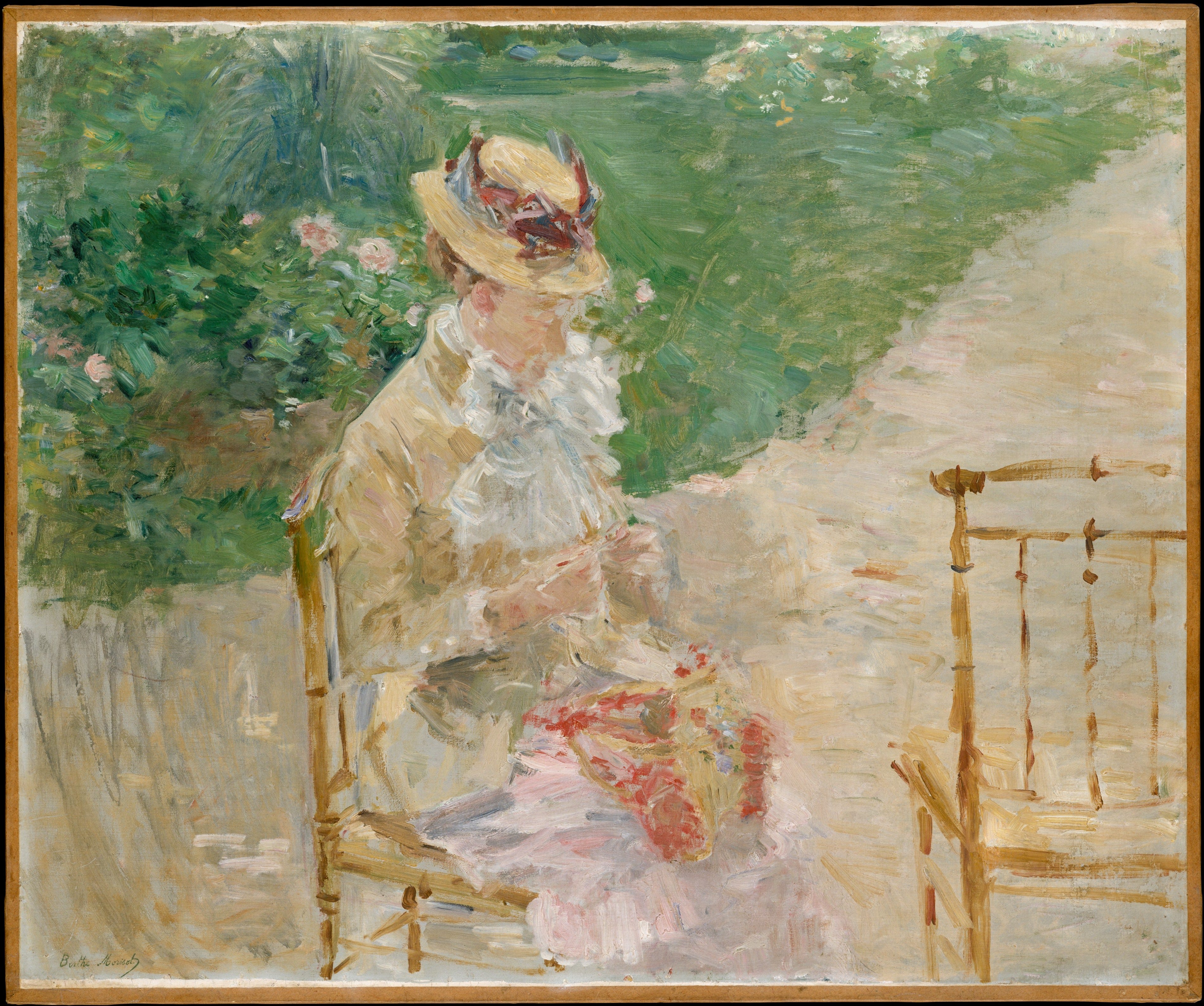
Along with her reading, she is a master crafter. Sweaters, socks, skirts, scarves; you name it, she makes it. While it may have begun as a necessity born of poverty, it evolved into something far more radical. Or as I would like to call it, a Secret Garden. In a life where her time was always spoken for by a father, a husband, or a child, the space between two knitting needles was the only territory she truly owned. When she counts her knots, she is counting her own worth. She is “traditionally multifunctional,” boiling potatoes with one eye on the stove and one eye on her pattern, but in that moment, she is an architect. She has that ownership over the physical world.
That lady’s name is Şazimet, and she is my grandmother. She was never performing for a crowd. She didn’t expect applause for her reading. Her art was a survival instinct.
The Weaponisation of “Performative” and Physiological Backlash
If Şazimet were 25 today, sitting in a sun-drenched cafe in Amsterdam with a copy of Wuthering Heights and a crochet hook, the modern world would treat her very differently. As she adjusted her glasses to read or paused to fix a dropped stitch, a certain type of cynical passerby would roll their eyes. They would use the word that has become the ultimate witch allegation phrase for the young people of this century: “Performative.”
We have taken a term that was originally a tool of liberation and turned it into a cage. In her seminal work, Gender Trouble, Judith Butler (1990) argued that gender is “performative”—not in the sense that it is “fake,” but in the sense that it is a repetitive set of acts we perform to navigate a world that demands we be “man” or “woman.”
However, modern culture has stripped the nuance from this. Today, “performative” is used as a slur to imply that a woman has no internal life. It suggests that if she is reading a difficult book in public, she is doing it for “intellectual clout.” If she is knitting a complex garment, she is doing it for “aesthetic points.” It implies that a woman is a creature without a core, a mirror that only exists to reflect the expectations of an audience. This is the degradation of the term as it assumes that a woman’s primary motivation is always to be seen, rather than to be.
Why are we so quick to assume a woman is “acting” rather than “being”? The answer lies in a documented social bias regarding competence vs. likability. To understand why we are so quick to label a woman “performative,” we must look at the Heidi/Howard study conducted at Columbia Business School (Flynn & Ames, 2003).
In this study, researchers presented students with the true story of Heidi Roizen, a highly successful venture capitalist in Silicon Valley. For half the students, the protagonist’s name was changed to Howard. The facts of their career remained identical: the same grit, the same networking, the same mastery of the market, everything the same. They got interesting, but expected results. While the students rated both as equally competent, their emotional response to the two characters was the polar opposite. Howard was viewed as a “likeable leader” and a “go-getter.” Heidi, however, was viewed as “self-promoting,” “power-hungry,” and most crucially ”calculatingly performative.” Social psychologists call this the Backlash Effect. When a woman displays high levels of agency or competence, she violates the traditional stereotype of women as communal and selfless. Because she doesn’t fit the mold, the observer’s brain looks for an excuse to dislike her. The easiest excuse is to claim her competence is a “performance” designed to gain power. When we call a woman “performative” today, we are doing exactly what those students did to Heidi. We are punishing her for having the audacity to be visible in her expertise. We are essentially saying that her talent is a ruse, a mask worn to hide her true (and implicitly lesser) nature.
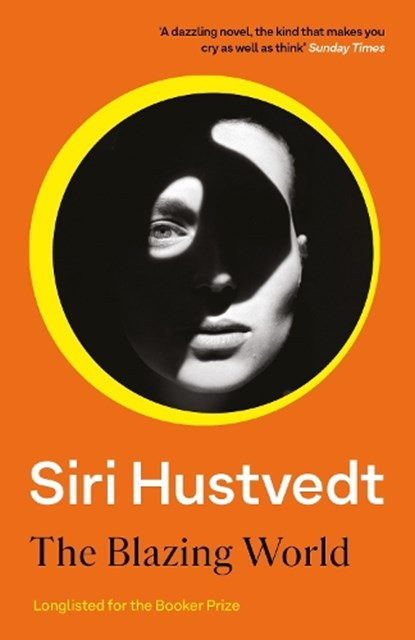
The novelist Siri Hustvedt (2014) takes this critique a step further in The Blazing World. Her protagonist Harriet Burden is a brilliant artist who is consistently overlooked because she is a woman. The critics don’t see her art but instead they see her “performance” of being a female artist, which they find tedious or superficial. To reclaim her standing, Harriet conducts an experiment. She shows her work under the names of three different men. Under these male masks, her art is hailed as groundbreaking and visionary. The moment the masks are removed, the standing just vanishes. The work is suddenly dismissed as a “clever stunt” or a “feminist performance.”
This is the tragedy of the term “performative.” It robs women of their last resort of standing and their right to be taken seriously as producing, thinking, and creating members of society. If we decide that everything a woman does is for show, then we never have to actually engage with the utility or mastery of her work. We can ignore the warmth of the sweater because we are too busy judging the woman who knit it. We reduce her lifelong dedication to a craft into a momentary play for attention.
The Aestheticisation of Labour From Necessity to Cringe
There is a specific cruelty in how we treat “feminine” hobbies like knitting or crocheting. For Şazimet, these were survival skills. They were the “unpaid labour” that kept a family clothed and a mind sane. However, as soon as these skills moved from the private sphere of the mountain village into the public sphere of the modern city, they were stripped of their dignity.
In the modern eye, if a woman knits, she is participating in an aesthetic. We call it craftcore or grandmacore. By turning a technical skill into a vibe, we make it easier to call it performative, because then it actually becomes a performance. We forget that a sweater requires thousands of precisely counted stitches, a level of focus and manual dexterity that would be called craftsmanship if a man were doing it with wood or steel.
Furthermore, we use the word cringe as a secondary weapon. If a woman shares her progress, she is cringe. If she takes pride in her work, she is performing. This creates a culture where women feel they must hide their efforts to be seen as authentic. It suggests that women have no private joy, no internal drive for mastery, and no intellectual hunger that exists outside of a man’s gaze. It is a psychological enclosure, a way of telling women that their secret garden is actually a public stage, whether they like it or not.
The “Matcha Men” and the Double Standard of Authenticity
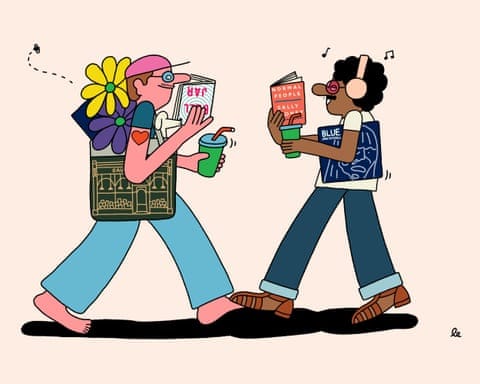
I see this double standard every day in where I live, Amsterdam. I see men in cafes, sipping their matchas, holding books (often upside down, I swear), performing a version of the sensitive intellectual specifically designed to lure women. And yet, we rarely hear a collective outcry against “performative men.” Their aesthetic is treated as a stylistic choice, an extension of their vibe most of the time. Society grants them the benefit of the doubt and we assume they are the person they appear to be. But when a woman engages in the same behaviour, she is scrutinised for her authenticity. If she knits, she is performing traditionalism. If she reads, she is performing intelligence. This scrutiny is a form of emotional labour (Hochschild, 2012), a requirement that women must not only do the work but also prove they are doing it for the “right,” non-threatening reasons. We demand that women be “natural” while simultaneously telling them that everything they do is a social construct. It is an impossible double bind. It makes me feel heavy even to write about to be honest.
When we label a woman’s work as “performative,” we are doing more than just insulting her character. We are erasing her capabilities. We are saying that the hours of practice, the failed attempts, the calloused fingers, and the mental gymnastics required to master a craft are secondary to the show. This overlooks what women are actually producing. It ignores the utility of the objects and the depth of the ideas. By focusing on the “motive” (attention-seeking), we give ourselves permission to ignore the mastery. We turn her labour into a costume, implying that anyone could do it if they just wanted the attention badly enough. This is the ultimate theft of female agency. It tells women that their hard-won skills are actually just a form of social currency, easily spent and easily forged by anyone with access to it.
But let me tell you something very confidently: Şazimet didn’t knit for the Instagram views. She didn’t read Dostoevsky to prove she was smarter than the men at her father’s restaurant. She did these things because they were the only way she could remain whole in a world that tried to fragment her into a thousand domestic duties. Her standing was built stitch by stitch, page by page, in the quiet hours before dawn.
When we use the word “performative” to dismiss modern women, we are attempting to put them back at that restaurant sink. We are trying to say your skill is not a skill; it is a plea for attention. We are attempting to strip away the sense of ownership that my grandmother found in a ball of yarn and a few wooden sticks. We are telling the next generation of women that their passions are only valid if they remain invisible.
It is time to stop looking for the “motive” and start looking at the capability. My grandmother’s survival was not a performance. My craft is not a performance. Our intellect is not a performance. It is the core of who we are.
It is our standing. And we are not sitting down.
References (APA Style)
Butler, J. (1990). Gender trouble: Feminism and the subversion of identity. Routledge.
Flynn, F. J., & Ames, D. R. (2003). The Heidi Roizen Case Study: Perception of success and likeability in gendered contexts. Columbia Business School.
Hochschild, A. R. (2012). *The managed heart: Commercialization of human feeling* (3rd ed.). University of California Press.
Hustvedt, S. (2014). The blazing world. Simon & Schuster.
Lorde, A. (1984). Sister outsider: Essays and speeches. Crossing Press.
Solnit, R. (2014). Men explain things to me. Haymarket Books.
If you’ve read this far, phewww! Thank you! It felt incredible to be able to form and share something again. I’m having a very (VERY) tight studying agenda at the moment, but I can feel the summer approaching with its blessings. I hope everyone is doing well. I would love to hear about your ideas about this piece. Until the next time (it might take quite a while…), stay with love <3
p.s. Don’t worry, it is actually me. I think my frontal lobe had another development session and now we’re back with the capital letters baby!
Catch you later,
bibi 🪄🌟
this is beautifully written, the start about your grandmother made me tear up :( keep writing!!! much loveee
Wow! What a lovely essay. How sad it is that everything has been commodified. I think the solution is to just go about your life doing the things that you love. If someone finds that to be inauthentic that is truly their loss for spending their time judging others instead of finding a hobby and joy for themselves. That's my rant on the subject. I'll always admire people for their art and knowledge. Also, will be checking out the book you recommended!